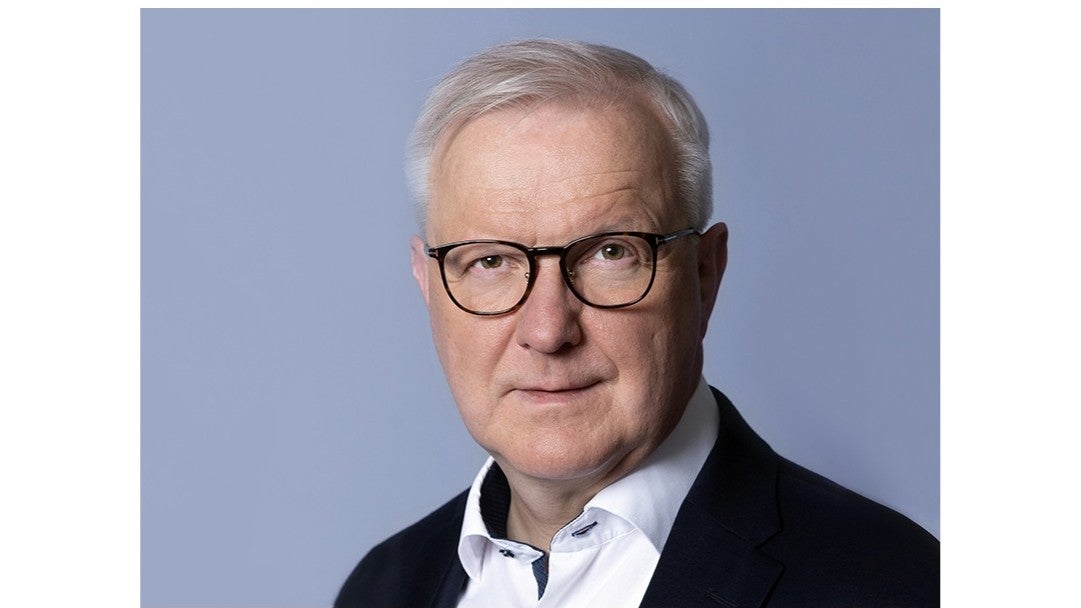
The European Central Bank (ECB) Governing Council member Olli Rehn said energy prices remain the main source of euro area inflation volatility, but the shock has not yet generated a wage-price spiral or widespread domestic price pressure.
Speaking at an OMFIF event in London, Bank of Finland Governor said wage growth had eased, while broader evidence of inflation persistence remained limited.
Go deeper with GlobalData


Access deeper industry intelligence
Experience unmatched clarity with a single platform that combines unique data, AI, and human expertise.
The assessment supports the ECB’s focus on distinguishing temporary energy-driven moves from price pressures that could alter the medium-term path for interest rates.
“For euro area inflation, energy prices remain the primary driver of volatility, while wage growth has moderated and second-round effects in the form of a wage-price spiral have not materialised,” Rehn said.
The ECB adjusted policy rates at its September meeting. Rehn said the Governing Council would not set out a predetermined course for borrowing costs, instead judging each decision against new economic and financial information.
“The Governing Council does not pre-commit to a specific rate path,” he said. “We maintain a meeting-by-meeting, data-dependent approach.”
Rehn warned, however, that geopolitical disruption continued to present upside risks to inflation.
“Monetary policy cannot drill for oil or generate electricity; it cannot directly resolve physical supply bottlenecks,” Rehn said. “However, monetary policy is essential to ensure that external price shocks do not become embedded in inflation expectations.”
December-most likely window for rate increase: GlobalData TSLombard
Assessing these supply pressures, GlobalData TS Lombard macroeconomist Davide Oneglia recently wrote that a material worsening in European energy supply would point to one or two ECB rate rises occurring “earlier” than previously anticipated.
While the central bank is not yet in “panic mode”, Oneglia views December as the most probable window for the next rate increase, with subsequent options to adjust again in March or defer further action to the second half of 2027, leaving the projected terminal rate at 3% for now.
Rehn also addressed the fiscal response to higher energy costs. He said assistance for vulnerable households could be appropriate during sharp price increases, but cautioned against broad schemes that subsidise energy consumption.
“Broad untargeted subsidies distort price signals, strain public finances, and undermine incentives for the clean energy transition,” he said.