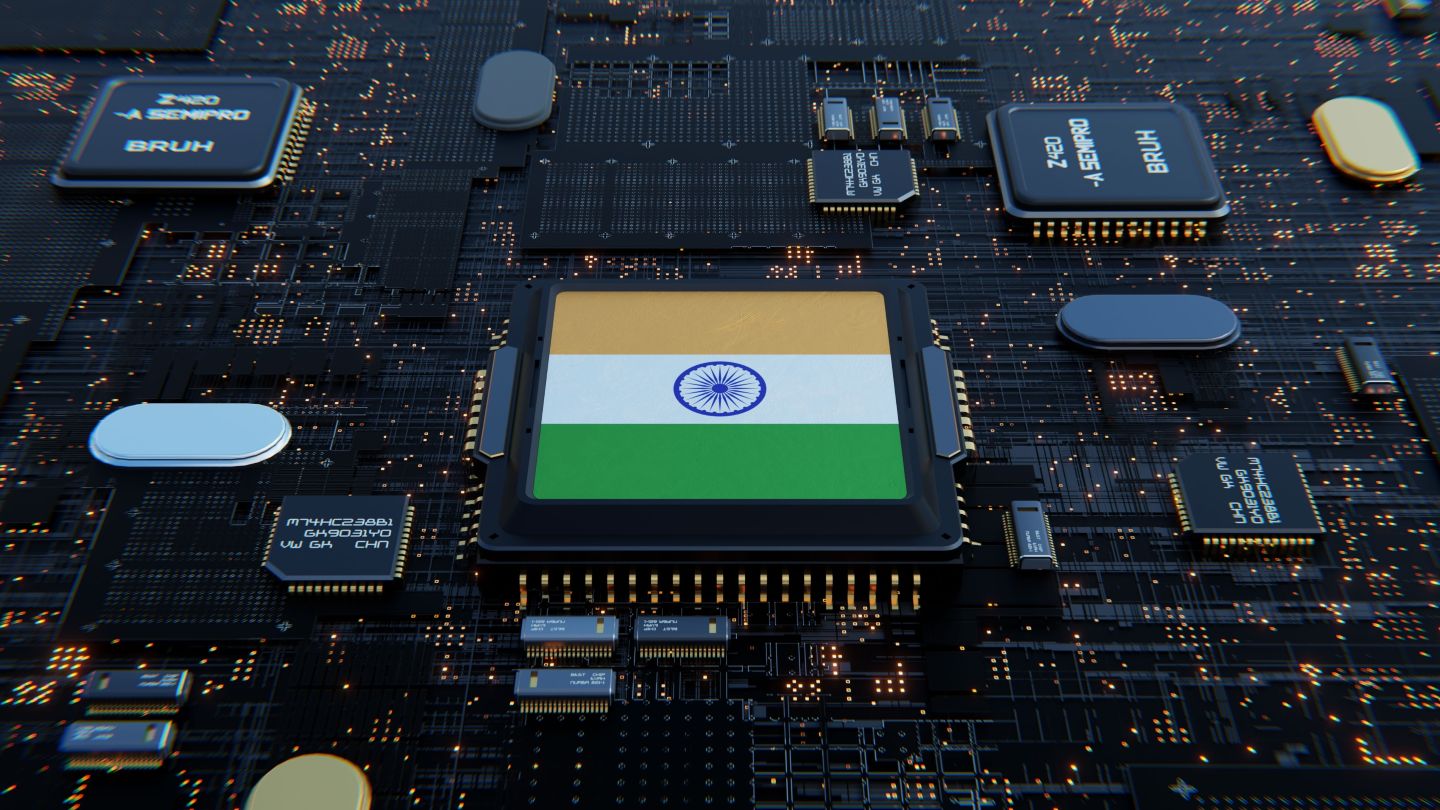
The National Payments Corporation of India (NPCI) has introduced Finance Model for India (FiMi) Banking, presenting it as a “sovereign compact model” for retail banking applications in India.
Alongside the launch, NPCI is making public the benchmarks, evaluation sets and technical paper used to assess the performance of banking AI agents.
Go deeper with GlobalData

Access deeper industry intelligence
Experience unmatched clarity with a single platform that combines unique data, AI, and human expertise.
The organisation will also work with HDFC Bank on further development of the model, bringing together NPCI’s technology base and HDFC Bank’s banking and AI experience.
FiMi Banking has been trained for Indian retail banking tasks and is intended to handle complex assignments involving long-context processing within a bank’s rules and existing systems.
It is based on Gemma, Google’s family of open models, with additional training carried out by NPCI using Indian retail banking scenarios.
NPCI said the model is aimed at task execution in banking settings, including situations where an AI agent must reason, use tools and carry out actions, rather than only respond to queries.
The release includes an open evaluation framework for developers, banks, fintech companies and researchers to test banking AI agents against standardised Indian retail banking scenarios.
NPCI said the benchmarks rely on synthetic data and do not contain actual customer, account or institutional information.
The technical report sets out the evaluation structure, scoring approach and results, allowing others to reference and reuse the work.
The two benchmarks released with the model, ‘IndicBank Bench’ and the ‘Tau Agentic Banking Benchmark’, are designed specifically for Indian retail banking AI agents.
IndicBank Bench consists of 799 scripted multi-turn test cases covering six retail banking areas. It measures AI agents on three factors: Safety, Actions and Response appropriateness.
The Tau Agentic Banking Benchmark contains 1,000 tasks across 50 scenario groups and is built on the open-source τ²-bench framework’s dual-control simulation.
Under this setup, a second model acts as the customer, allowing the banking AI agent to be tested through dynamic, multi-turn exchanges.