
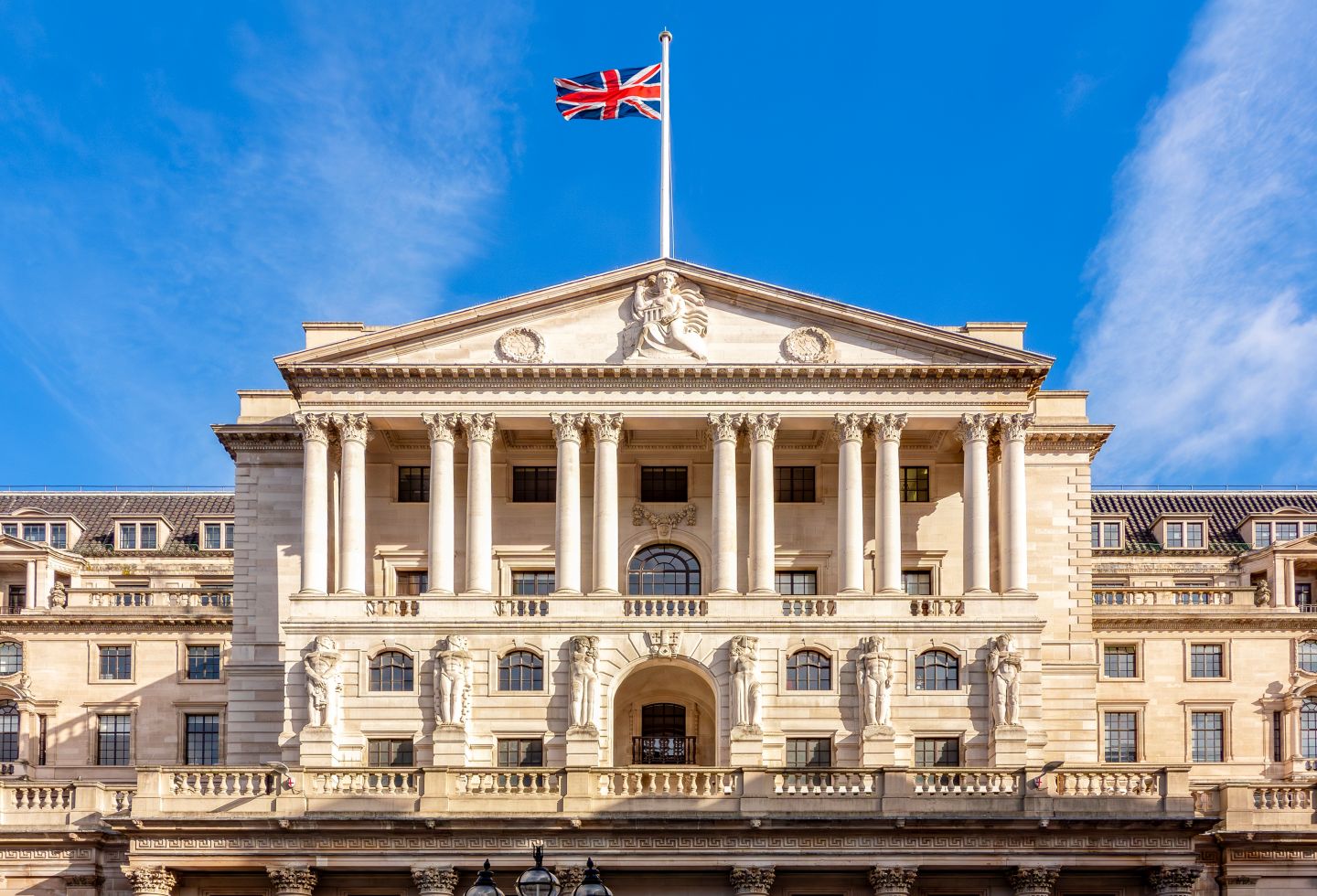
The UK Parliament’s Treasury Committee has opened an inquiry into the Bank of England to determine if its monetary policy independence is “still fit for purpose”.
The central bank received autonomy over monetary policy in 1997, initially managing benchmark interest rates before expanding into quantitative easing and tightening programmes from 2009 onward.

Access deeper industry intelligence
Experience unmatched clarity with a single platform that combines unique data, AI, and human expertise.
Although consumer price index inflation moderated to an average of 2.5% post-independence, down from 7.3% recorded between 1967 and 1997, the country now faces a substantially larger national debt burden, alongside inflation exceeding official targets for the majority of the past five years.
In light of these shifts, MPs on the Treasury Committee are assessing if the central bank’s autonomy is still working and whether modifications are needed to ensure its remit lives up to the economy’s needs.
The evaluation encompasses the tangible effects of autonomous policy on curbing price rises and bolstering macroeconomic credibility, while contrasting domestic strategies against those of overseas counterparts.
Lawmakers will also examine whether past conduct by either the central bank or the government has raised questions regarding operational separation.
Furthermore, the committee is examining whether elevated public borrowing, alongside quantitative easing and tightening, alters the fundamental justification for an independent authority, including how asset purchases and balance sheet reductions evaluate against international peers.
Besides, lawmakers are reviewing practical safeguards, investigating potential remit overreach, excessive isolation from ministerial oversight, or political encroachment by the government and Parliament.
Inter-agency coordination involving the Bank, the government, and the Debt Management Office forms another focal point, alongside the future relevance of the Monetary Policy Committee’s remit heading into 2027 and the value of historical adjustments.
Additional scrutiny will address forecasting and communication reforms following the 2024 Bernanke review, the breadth of expertise and diverse viewpoints within the rate-setting body, appointment procedures and accountability structures.
Alignment with financial stability duties, and the consideration afforded to the value of pound sterling will also be factored in.
Interested parties must submit evidence to the committee by Friday 6 November 2026.
Treasury Committee chair Dame Meg Hillier said: “The country and the world has changed significantly since the Bank of England was given the powers to set monetary policy independently by Gordon Brown. The key questions are, how is it working and is the current system fit-for-purpose 30 years later?”