
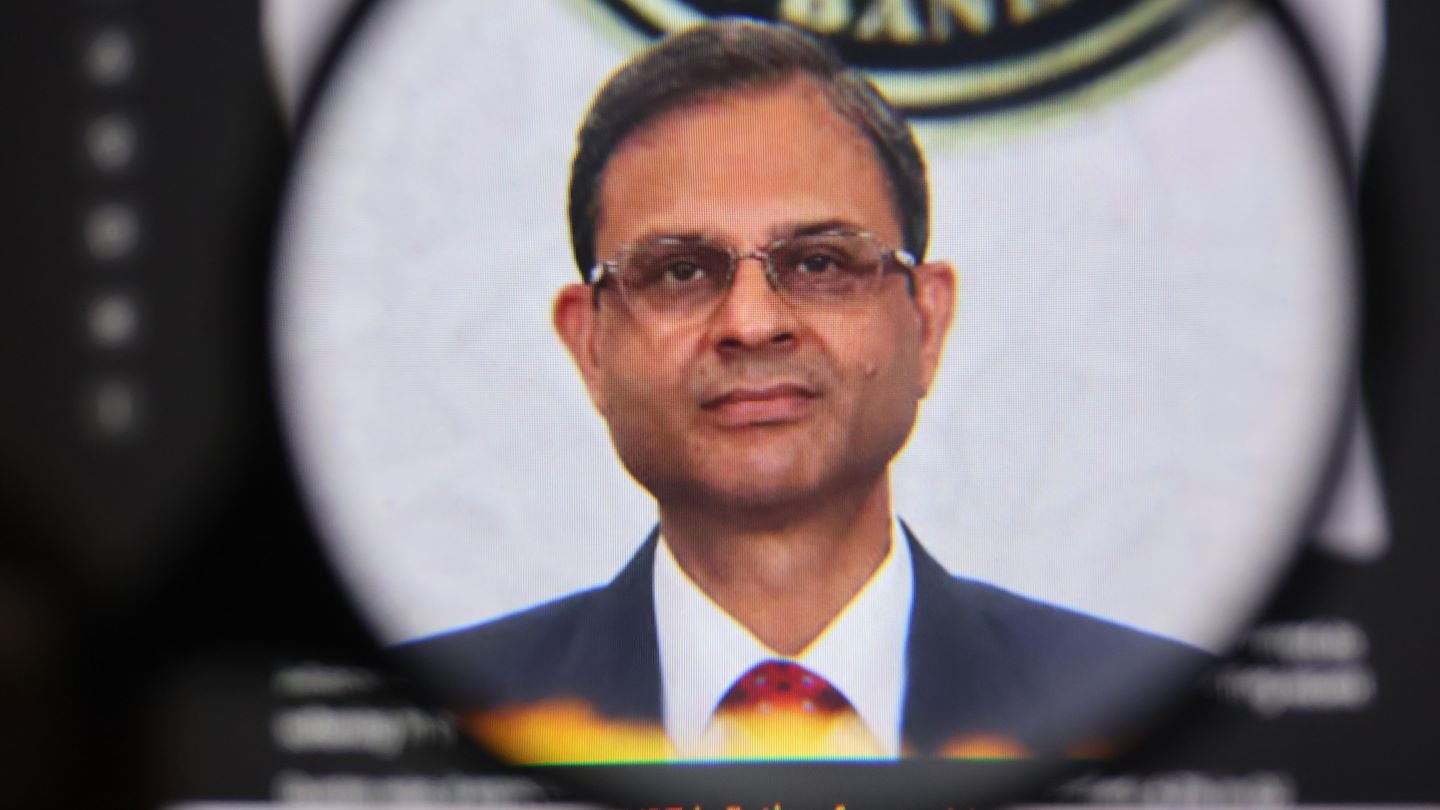
Reserve Bank of India (RBI) governor Sanjay Malhotra called on Indian banks to approach AI as a board-level strategy instead of basic technology purchases and cautioned that slow adopters risk losing control of the shift.
Speaking in the opening session of FIBAC 2026, the annual banking conference organised by FICCI and the Indian Banks’ Association, Malhotra said AI would be the defining force of this decade, in the way digitalisation marked the 2000s and liberalisation shaped the 1990s.
Go deeper with GlobalData


Access deeper industry intelligence
Experience unmatched clarity with a single platform that combines unique data, AI, and human expertise.
“The only question now before us is whether you shape the AI journey or you let it shape you by default,” he said.
According to him, AI could aid financial judgement in the same way UPI supported payments.
Malhotra said AI was not comparable in a simple way with earlier changes in technology.
He said that while electricity increased energy and the internet increased connectivity, AI increases intelligence, affecting the way banks assess and extend credit.
He said systems built on alternate data, including cash flows, tax filings, utility payments and records from digital platforms, could widen access to formal credit beyond what conventional underwriting can achieve, especially where borrowers lack deep financial histories.
According to Malhotra, India has an edge because of its public digital infrastructure, including Aadhaar, UPI, the account aggregator framework and the unified lending interface.
He said AI could have a similar effect on financial judgement to the one UPI had on financial transactions, by making it immediate, detailed and available at the last mile.
He also named customer service, vernacular voice interfaces, operational efficiency and real-time fraud detection as areas where banks could see quick gains.
He said rules-based fraud systems remain behind fraudsters who change tactics more quickly.
Malhotra said AI should support human judgement rather than simply displace it.
He listed seven areas of risk, including the explainability of black-box decisions, bias and exclusion carried over from past lending data, concentration risk linked to a limited group of models and vendors, and third-party dependencies.
He also flagged data privacy duties, cyber and adversarial vulnerabilities, and weakening of human accountability among risk areas.
“Fairness in AI is not a compliance checkbox. It is a design requirement,” he said, adding that final responsibility for a bank’s decision must remain with the bank rather than a vendor or an algorithm.
Referring to recommendations from the RBI’s committee on the responsible and ethical enablement of AI, Malhotra said banks should move immediately on several fronts.
These include a full inventory of models already in use, a board-approved AI governance policy focused on outcomes rather than procurement, the ability to explain decisions that have a material effect on customers, red-teaming and stress-testing of AI systems, and meaningful human oversight wherever failures could cause material harm.
He said the central bank would continue with a principles-based and proportionate approach, noting that capability and risk vary significantly between a large bank and a small lender using a single off-the-shelf product.
The RBI, he noted, would keep supporting the regulatory sandbox and develop shared utilities, including the digital payments intelligence platform currently being established.
“The banks that will win in the AI era will not necessarily be the ones that adopt AI faster or the most,” he concluded.
They would be those that deployed it with the clearest accountability for outcomes and the strongest commitment to customer trust — “the true capital of Indian banking.”