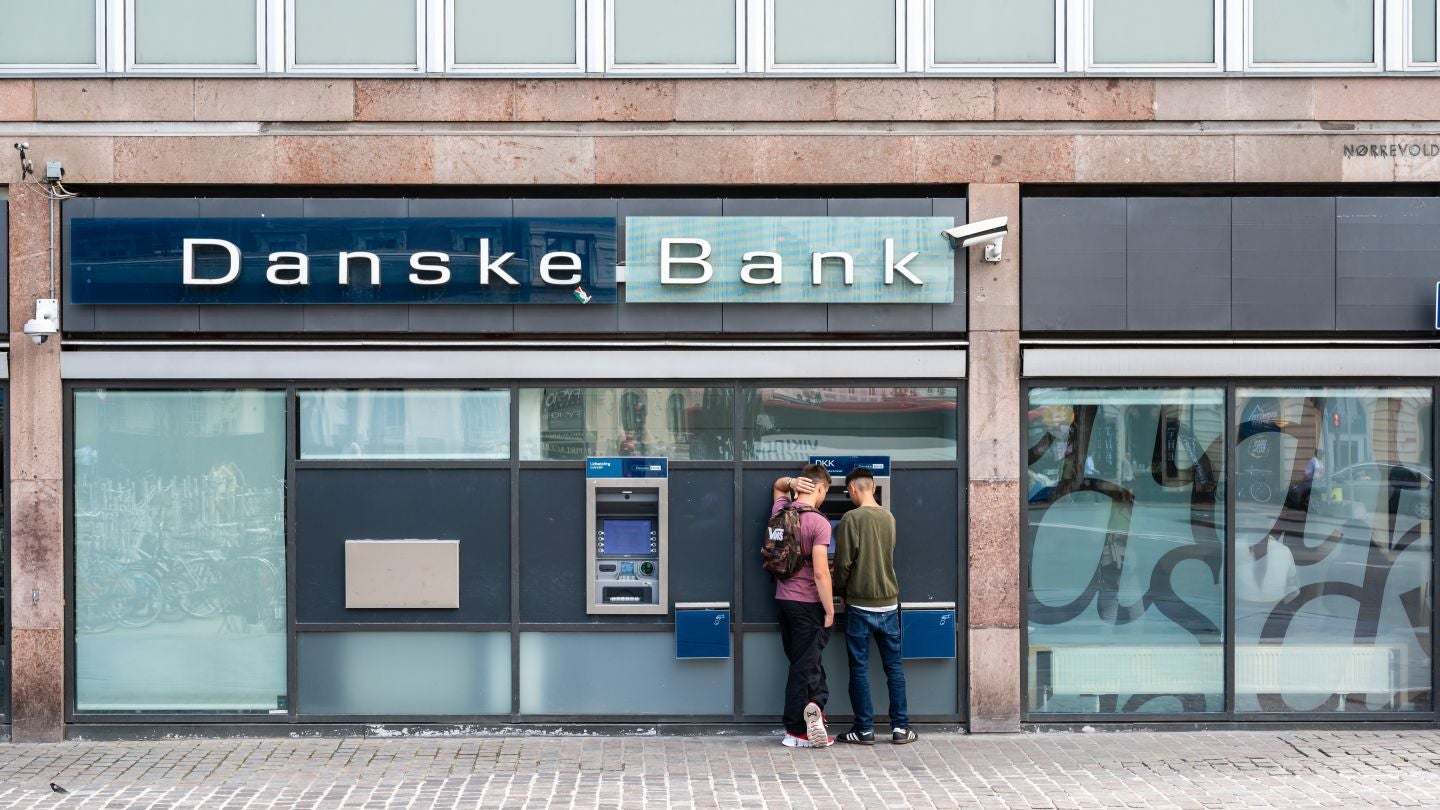
Danske Bank expects its employee base to decline further over the next few years as client requirements evolve and the lender makes wider use of AI and other digital tools, reported Bloomberg citing a senior executive.
In an interview, the bank’s technology and services head Frans Woelders said that AI would affect the organisation as a whole rather than only certain departments.
Go deeper with GlobalData


Access deeper industry intelligence
Experience unmatched clarity with a single platform that combines unique data, AI, and human expertise.
The bank is getting ready to widen AI use beyond employee support tools. Woelders said staff are expected to have their own so-called agents able to carry out tasks before the end of this year.
Danske is working with Amazon Web Services to move legacy applications as part of an overhaul of its technology stack.
“There’s no area within the work that we do that would not be impacted by AI,” Woelders said.
In May, Danske Bank said it would remove 262 roles in seven countries, pointing to greater automation and the use of AI for simpler work among the reasons.
The lender reported 19,472 full-time equivalent employees at the end of June.
Woelders said AI would also lead to some additional roles, while demand for technology services remained high enough that staffing in that part of the business would likely stay broadly unchanged through next year.
“This is not the phase in which you see a reduction of people working in technology,” he said.
“We can do more with the same.”
According to Woelders, Danske has around 4,000 developers, and their output has already risen by about 40% with the help of AI tools.
The bank expects that figure to reach 100% by the end of 2028, which would mean developers becoming twice as productive.
He added that the bank also works with about 2,000 people through Indian IT giant Infosys.
Across the wider workforce, employees currently estimate that AI tools save them around two hours in a 40-hour working week, a figure Woelders said he expects to “drastically increase.”
In April, Danske Bank confirmed that it had unintentionally exposed the addresses of about 20,600 customers to third parties last year.
The lender said it became aware of the issue in October, and later reviews showed that a significant number of clients had been affected.