The market consensus is that the general risk sentiment is quite muted with one caveat-market participants should continue to brace for significant market volatility.
Saxo’s Global Head of Macro Strategy, John Hardy
What is going on?
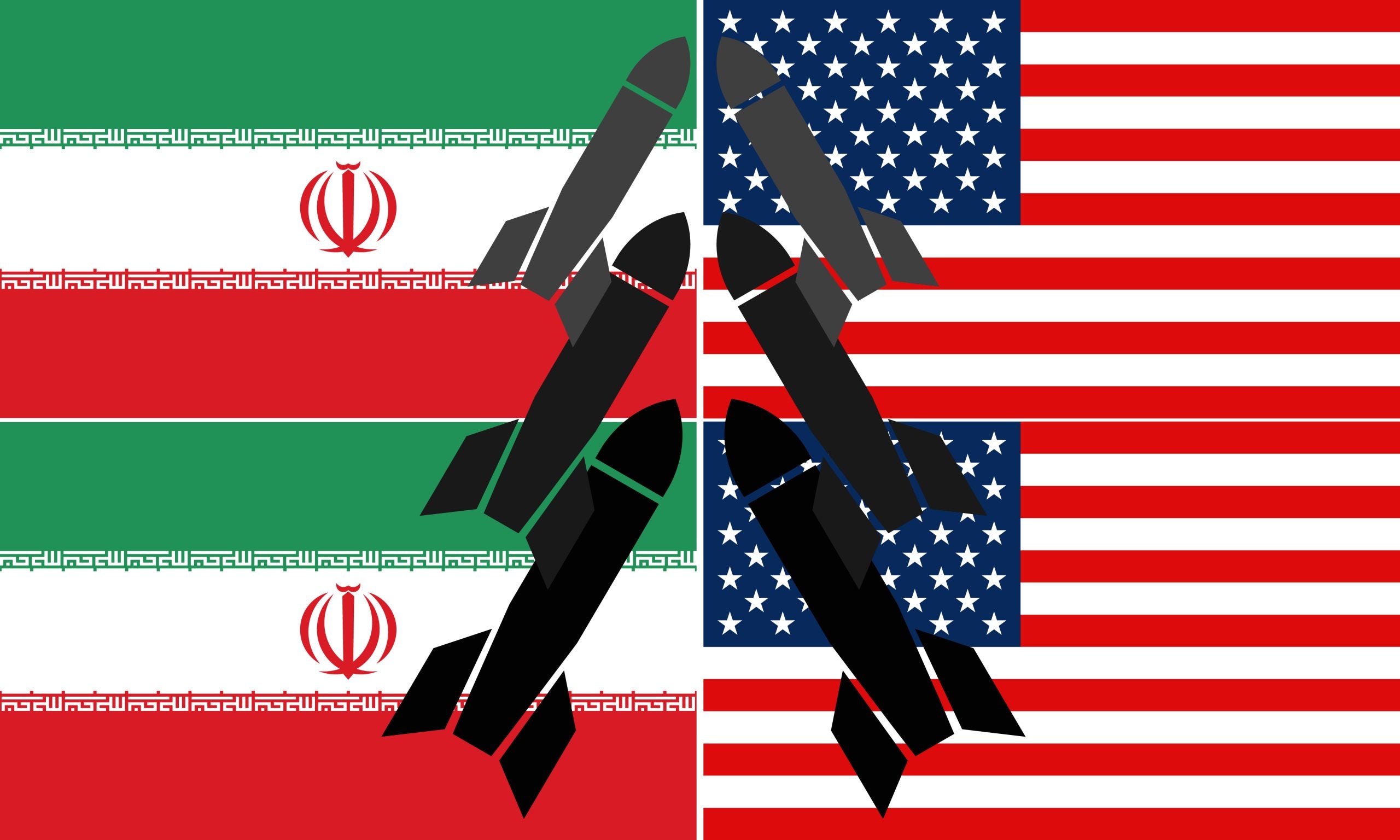
Global markets are absorbing the implications of comprehensive US-Israeli attacks on both Iran’s government leadership and military installations, and Iran is responding with a flurry of missile and drone launches against US and Israeli targets, but also civilian and economic infrastructure targets in Dubai and Abu Dhabi. These have created little material damage but significant disruptions in the region – for example to the main UAE airports (Abu Dhabi and Dubai) which have been shut down.
Go deeper with GlobalData

Access deeper industry intelligence
Experience unmatched clarity with a single platform that combines unique data, AI, and human expertise.
Most importantly for global markets, shipping through the Strait of Hormuz (the narrow sea access to the Persian/Arabian Gulf has almost entirely stopped due to the outbreak of this conflict, less due to Iranian threats than due to an abundance of caution by shippers, who are concerned for their cargoes and don’t want to enter a war zone and in most cases likely can’t proceed because of the spike in insurance costs. The Strait of Hormuz is critical as about 25% of global exports go through this narrow waterway between Iran and Oman/UAE – also from Kuwait, Iraq, Saudi Arabia, etc.
It appears that US and Israel are hoping that a decapitation of the Iranian regime, where the Ayatollah has already been eliminated together with other key leaders, will result in a popular uprising that will bring entirely new leadership. More on that below.
How markets are reacting?
Risk sentiment
The general risk sentiment reaction is significant but looks quite muted compared with the risks from this conflict. Japan somehow only posted a small loss of -1.35% in its Monday session despite the enormous jump in crude oil prices. Japan is entirely reliant on crude oil imports – almost all of them from countries that export via the Persian/Arabian Gulf and through the Strait of Hormuz.
As of this writing, the US S&P 500 futures are only down about 1.5%. European markets opened down more than 2% after missing late weakness in US equity markets on Friday. Equity traders and investors will quickly try to identify the winners and losers if the fallout from this conflict widens, but names in defence in energy will likely prove among the few outperformers while nearly everything else could come under significant pressure. Strange patterns can also emerge in equity markets as a general risk-off wave can cause deleveraging in crowded “factor” bets in the markets entirely unrelated to general risk sentiment.
Energy and precious metals markets
Oil prices have seen the largest reaction among major assets to the attacks on Iran and on the disruption of shipping through the Strait of Hormuz. Brent futures are up nearly 10% and near $80 per barrel. A very concerning story breaking Monday morning is a drone attack on Saudi Arabia’s massive Ras Tanura refinery complex, which has shut down operations. And it is not just about oil but also gas. Qatar is a major gas exporter via ship (LNG) through the Strait of Hormuz and European gas prices have spiked more than 20%, luckily for Europe as winter weather is winding down. Not related to the Iran conflict, but also important is that Ukraine has launched a significant drone attack on Novorossiysk, Russia, a major crude oil loading facility in the Black Sea.
Gold prices gapped higher on Monday, underlining its role as a safe haven. As of this writing, the gold price is up over $100 per ounce and near $5,400, within a few dollars of its record daily close on the recent run-up in prices, though far from its all-time intraday high of $5,595 back in late January.
Currencies
The US dollar is serving as the chief safe haven currency, but up well under 1% versus other major currencies as the currency market continues to see little volatility. The US dollar strength is followed by the Swiss franc and Norwegian krone, where EURNOK is suddenly at multi-year lows on Monday. The Japanese yen is neutral to slightly weaker against most other currencies, perhaps a surprise to some relative to prior episodes of general weak risk sentiment, but we have to consider Japan’s 100% reliance on imported oil – the vast majority of that going through the Strait of Hormuz.
US Treasuries
US treasury yields closed Friday on a strong note, perhaps suggesting some anticipation of the risk of a conflict breaking out, but yields are actually slightly higher on Monday, a stunning change relative to prior cycles when US treasuries were nearly universally considered the safe haven asset of choice. Some cold argue that high oil prices will also spike inflation and therefore prevent the Fed from cutting as much, but economic weakness and the labour market are greater threats if big spike in oil prices is sustained. I think it is more of a signal that the world doesn’t see US treasuries as a credible safe haven any longer.
What to watch for from here
The first thing to note is that market reactions thus far, perhaps outside of crude oil and gold, look quite muted relative to the risks from here. Normally in these situations, I like to put together a few scenarios and place a probability on each, but don’t feel confident enough in assessing what will happen here to run through this exercise. Rather, I prefer this time to ask the most pressing questions for which the markets will be looking for answers in the coming days and even weeks.
Can the regime hold out and for how long?
It looks like the US and Israel are seeking regime change, and it may need to happen quickly if it is going to happen at all. One argument many are citing for the need for speed is that US- and Israeli ammunition can’t sustain an assault of the current intensity for more than a few days or about a week. The FT and others suggest that Iran is responding at a slow but steady pace with cheaper drones and older missiles to exhaust US and Israeli missile- and drone defensive capabilities, in order to deliver a punchier response with its most modern weapons further on.
Takeaway
Market discomfort will grow with every day the regime hangs in there and especially if it continues to show the capability of launching further attacks – whether on military, energy infrastructure and even civilian assets. The status of shipping through the Strait of Hormuz is the most important single variable, but regional energy infrastructure like Ras Tanura in Saudi Arabia is also critical.
If the regime goes down, what comes next?
No ideas here, just the general comment that oil flows from Iran could be considerable if Iran descends into total disorder on the lack of political leadership.
What will China do here?
Most of Iran’s (sanctioned) crude oil exports have flowed to China in recent years. Some argue that this is not only about Iran, but also about cutting off another oil exporter to China after the US decapitated the Venezuelan regime recently as most of that country’s crude exports went to China as well. China has signed a comprehensive deal with Iran promising significant cooperation with its military (no explicit alliance) and investment in building out its energy and other infrastructure as part of its Belt and Road Initiative. A Chinese response could come in the form of embargoes on rare earth exports or similar measures, based on accusations that the US and Israel have violated rules of international behaviour, etc., but so far they have only condemned the attacks and are calling for a ceasefire and talks.
What to do?
The best offense in times of uncertainty is defence and keeping overall market exposure modest. For the nimble, an added approach is to keep some cash on hand to deploy once clarity emerges. It’s impossible to know where this can lead, but we have likely only scratched the surface of the worst-case (and hopefully low probability) scenario. It is also important not to panic and over-correct – spikes of uncertainty can resolve very quickly if the disruption clears. Also, once markets have started to react to something like this, market volatility and especially implied volatility (how options are priced) spike, making the price of buying insurance very expensive and headline risk becomes intense in both directions as a situation like this unfolds.
Let’s hope that this situation resolves quickly and with a minimum further loss of life and that the other side of this sees a better government and better conditions for the Iranian people.
Samy Chaar, Chief Economist, CIO Switzerland, Lombard Odier
We have modelled two scenarios for the US-Israel/Iran conflict. The first, which we see materialising at present, is a scenario of limited escalation and a limited increase in the oil price. The second, which is not our core scenario, is a global oil shock, with a prolonged closure of the Strait of Hormuz and heavy military confrontation, leading to an increase of up to $50 per barrel in the oil price. Importantly, in both cases, we expect the oil price to revert to its recent ranges after six months.
Base scenario-limited escalation
In our base scenario of limited escalation, we expect an increase in average US headline inflation from 2.5% to 2.6% in 2026, with real GDP growth unchanged at 2.2%, and keep our scenario of three interest rate cuts from the Federal Reserve unchanged, as we would expect the Fed to look through any modest increase in headline inflation.
In the risk scenario of a global oil shock, the effects would include an increase in inflation and a decrease in various activity measures, notably industrial production where energy prices are an important input. Real GDP growth in the US would decrease, and the Fed’s job of balancing its dual mandate would become harder.
If long-term inflation expectations were to remain anchored, as they were throughout the pandemic and during tariff uncertainties, we would expect the Fed to regard the effects on inflation as temporary. If the rise in unemployment were comparatively contained, we would expect it to favour stability over aggressive cuts. However, if the unemployment rate were to rise above 5.5% – a level that is much worse than our model indicates – the Fed would then shift to an aggressive rate-cutting strategy towards 2.5% or lower.
For the other economies, especially in Asia and emerging markets in Europe, the Middle East and Africa, the second scenario would warrant greater downward revision in the real GDP growth and upward revisions in inflation due to their high dependence on energy imports from overseas.
Daniela Hathorn, senior market analyst, Capital.com
The coordinated US-Israel strikes on Iran, including the reported assassination of the country’s supreme leader and other senior officials, have triggered a sharp escalation in geopolitical tensions across the Middle East. This marks a significant shift from prior flare-ups and has caught markets off guard. Until now, investors were not pricing in a full-scale strike on Iranian leadership.
From a markets perspective, the central issue is energy
Iran sits at the heart of the global oil supply chain, both as a producer and through its geographic proximity to the Strait of Hormuz, a chokepoint through which a significant portion of global oil shipments pass.
Any sustained disruption could quickly evolve into a broader supply shock. Secondary risks include shipping slowdowns in the Persian Gulf and potential disruptions to global trade flows and aviation routes. If the conflict expands or persists, the inflationary consequences could ripple through the global economy. Crude oil prices have surged as traders price in supply risk, while gold has rallied on safe-haven demand. Equity markets, particularly in countries heavily reliant on energy imports such as Japan, China and India, face downside pressure as higher input costs threaten growth.
US dollar, Japanese strengthen – consistent with a flight to safety
In essence, markets are transitioning from a complacent risk environment to one that must now incorporate a geopolitical risk premium. The key variable is duration. If the conflict is contained and shipping lanes remain operational, volatility could fade relatively quickly. However, if escalation threatens energy infrastructure or maritime routes, the shock could become more structural.
What makes this episode particularly destabilising is the nature of the strike. The assassination of a head of state changes the strategic calculus. Unlike shorter, contained conflicts in recent years, Iran’s incentives may now lean toward retaliation and escalation rather than de-escalation, especially as the regime seeks to maintain credibility and internal stability.
The United States also faces a strategic inflection point, particularly following reports of US casualties. With Washington signalling that operations could continue for weeks, markets are confronting an open-ended conflict rather than a brief exchange. This creates a highly unpredictable environment. Financial markets struggle to price scenarios where the potential outcomes range from rapid containment to broader regional conflict. That uncertainty alone is enough to elevate volatility and encourage risk aversion, even before any measurable economic damage materialises.
Peter Clark, CEO of global wealth management firm Bentley Reid
We have spoken to multiple clients and industry contacts since the conflict began. Overall, there is a collective sense of calm and reassurance that the UAE authorities are handling the situation effectively.
Few conversations have been dominated by the potential impact on their investment portfolios. The discussions are focused on the general uncertainty, their personal/family circumstances and how/when the conflict may end.
Heightened volatility has become a constant feature in markets over the past five years and the likes of the pandemic, the Russia/Ukraine war etc. provide useful reminders that the long-term market impact from geopolitics and other exogenous events tends to be short-lived and limited.
The relatively benign reaction, both from clients and markets so far, means there has been no need to counsel against clients making short-term decisions. We spend a lot of time with our clients to help devise investment strategies that are relevant to their personal circumstances so exposures to the more volatile assets like equities and commodities will be in place for a specific, typically long-term purpose and they are typically ‘hedged’ with dedicated cash reserves or low risk allocations to help prevent forced selling.
If, or when, a client’s specific situation changes and I do not envisage there being many, if any, cases whereby the conflict fundamentally changes a family’s plans around retirement, succession planning or any of the other personal matters or events that form the bedrock of their investment strategy and wider wealth management arrangements.