
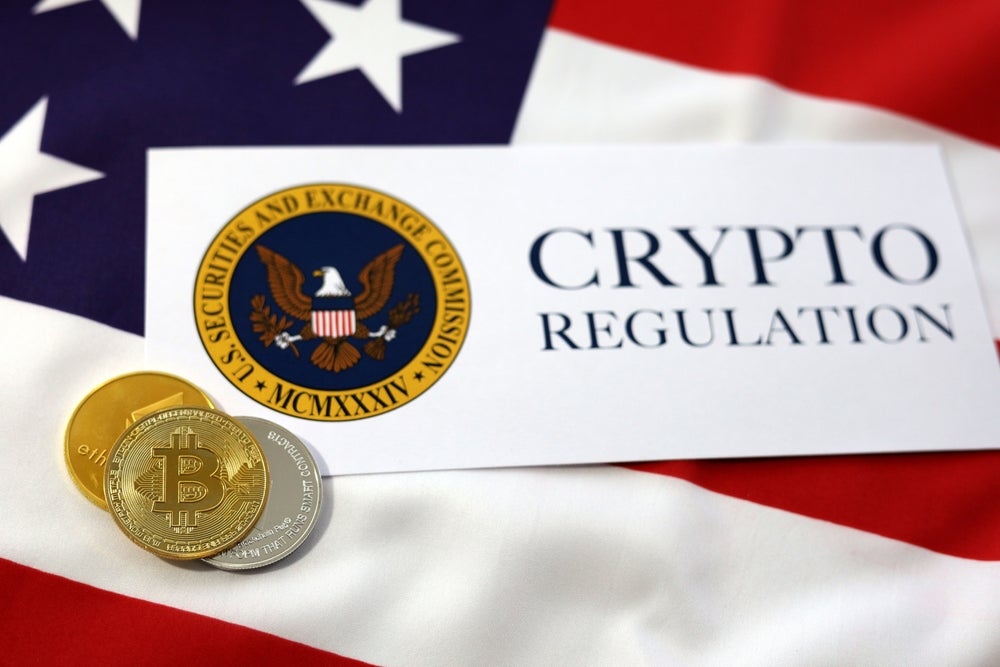
Few leading lawyers are as well qualified to offer an expert opinion on the ramifications of the US’ delays in sorting out the Digital Asset Market Clarity Act as Mahmoud Abuwasel. The Harvard-trained disputes attorney has represented clients in both US and UAE crypto litigation and is a Partner at global law firm Wasel & Wasel.
The White House had set a March 1, 2026, deadline for resolving negotiations on the legislation
Go deeper with GlobalData

Access deeper industry intelligence
Experience unmatched clarity with a single platform that combines unique data, AI, and human expertise.
The GENIUS Act, signed into law as long ago as 18 July 2025, established a federal framework for stablecoins. The Digital Asset Market Clarity Act — the far larger bill governing how all digital assets are classified and regulated — passed the House that same week. But in the Senate, the path forward became a study in political gridlock.
Crypto industry leaders are now meeting with the Senate Banking Committee and with bank representatives to review the stablecoin yield compromise that finally unblocked the CLARITY Act.
While Washington has moved at a snails pace, the UAE has built a regulatory environment that’s actively attracting crypto firms and capital. As Mahmoud Abuwasel practices crypto litigation across both jurisdictions, he has enjoyed a front-row seat to what American firms are losing. He tells RBI that there are lessons to be learnt from the UAE’s approach and why the Senate needs to get its act together.
RBI:
You have argued that passing GENIUS without CLARITY is like building a highway on-ramp with no highway; can you expand on that?
Mahmoud Abuwasel:
Think of the GENIUS Act, passed in July 2025, as a masterclass in building a perfectly secure, heavily fortified on-ramp. By mandating one-to-one reserve backing, strict anti-money laundering controls under the Bank Secrecy Act, and continuous disclosures, we successfully regulated the creation of US dollar-backed stablecoins.
However, stablecoins aren’t designed to sit idle in wallets; they are active mediums of exchange meant to travel. This is where the highway analogy comes in. By failing to pass the CLARITY Act, Congress has built this pristine on-ramp but hasn’t paved the highway.
Billions of dollars in highly compliant, federally regulated stablecoins are being minted only to be deployed into secondary markets, like decentralised finance protocols and offshore exchanges, that lack comprehensive federal oversight. This structural paradox creates a massive regulatory void.
We’ve secured the asset, but left the trading environment ambiguous, leaving everyday retail investors exposed to counterparty risks and creating national security vulnerabilities that malicious actors can exploit to evade sanctions. Until the Senate advances the CLARITY Act to govern digital commodity exchanges and establish clear jurisdictional boundaries between the SEC and CFTC, we are essentially accelerating traffic directly into an unpatrolled wilderness.”
RBI:
What does the stablecoin yield standoff mean for everyday investors — and why are banks scared?
Mahmoud Abuwasel:
The stablecoin yield standoff fundamentally represents a battle over the democratisation of finance versus systemic banking stability. Right now, major stablecoin issuers hold tens of billions in short-term US Treasuries to back their tokens, generating massive, near-risk-free returns. Yet, everyday retail investors holding these stablecoins currently see none of that yield. For the average consumer, passing through these Treasury-level returns would be transformative, operating much like a high-yield savings account but on a seamless, 24/7 blockchain rail.
However, traditional banks are legitimately terrified of catastrophic deposit flight. Commercial banks rely heavily on a massive base of low-cost retail deposits to fund long-term, illiquid assets like consumer mortgages and business loans. If consumers can instantly move their checking account balances into a fully reserved, government-regulated stablecoin paying a 5% yield, the traditional banking sector’s cheap funding evaporates. Prominent bank executives rightly argue that an un-safeguarded deposit paying interest without centuries of carefully developed prudential safeguards is dangerous. This macroeconomic fear of compressing bank lending capabilities is exactly why the banking lobby is fighting so hard to restrict stablecoin yield, effectively holding the CLARITY Act hostage.
RBI:
What are the clients you look after doing right now while Washington negotiates?
Mahmoud Abuwasel:
Our digital asset clients aren’t waiting for Washington to resolve its gridlock; they are operating with intense, hyper-pragmatism. The most dominant strategy we are advising is aggressive geographic and corporate ring-fencing. Clients are establishing strictly compliant, US-domiciled entities dedicated solely to explicitly permitted activities, such as basic custody and stablecoin issuance under the GENIUS Act framework. Simultaneously, any operations involving secondary trading, yield generation, or digital commodities are being strategically pushed to offshore entities in jurisdictions with clearer rules, like the European Union or the UAE.
Internally, they are proactively investing massive capital into bank-like compliance architecture. Knowing that severe anti-money laundering and sanctions frameworks are inevitable, they are hardcoding these protocols directly into their platforms now. Finally, on the offensive front, the industry has mobilised unprecedented political capital. Crypto-aligned PACs, such as Fairshake, entered the 2026 cycle with nearly a $200m war chest. Their strategy is brutally pragmatic: they are intensely lobbying and funding candidates who publicly support advancing the CLARITY Act and protecting self-custody rights, entirely regardless of partisan affiliation. They recognise that defining the next Congress is the only way to break the current legislative paralysis.”
RBI:
What is that the UAE got right that Washington keeps getting wrong?
Mahmoud Abuwasel:
The United Arab Emirates succeeded by addressing taxonomy before enforcement, while Washington remains paralysed by legacy jurisdictional turf wars between the SEC and CFTC. The US continually tries to force novel technology into outdated frameworks, but the UAE recognised early that digital assets require a bespoke, multi-layered regulatory architecture. At the federal level, the Securities and Commodities Authority (SCA) governs tokenized securities, embedding them into traditional capital markets, while the Central Bank of the UAE (CBUAE) strictly regulates domestic fiat-referenced stablecoins. In the financial free zones, the Abu Dhabi Global Market (ADGM) provides a highly specific, rigorous framework tailored for institutional capital, trading, and structured products.
The Dubai International Financial Centre (DIFC) similarly focuses on institutional services but maintains a distinct regime focused on specifically recognised tokens. Meanwhile, onshore Dubai created the Virtual Assets Regulatory Authority (VARA), the world’s first independent regulator specifically tailored for retail virtual assets and decentralised applications. This comprehensive structure provides absolute definitional clarity, creating a “license premium” that attracts massive institutional capital, whereas U.S. regulatory fragmentation continues to drive innovation offshore.

Mahmoud Abuwasel, Partner, Wasel & Wasel