
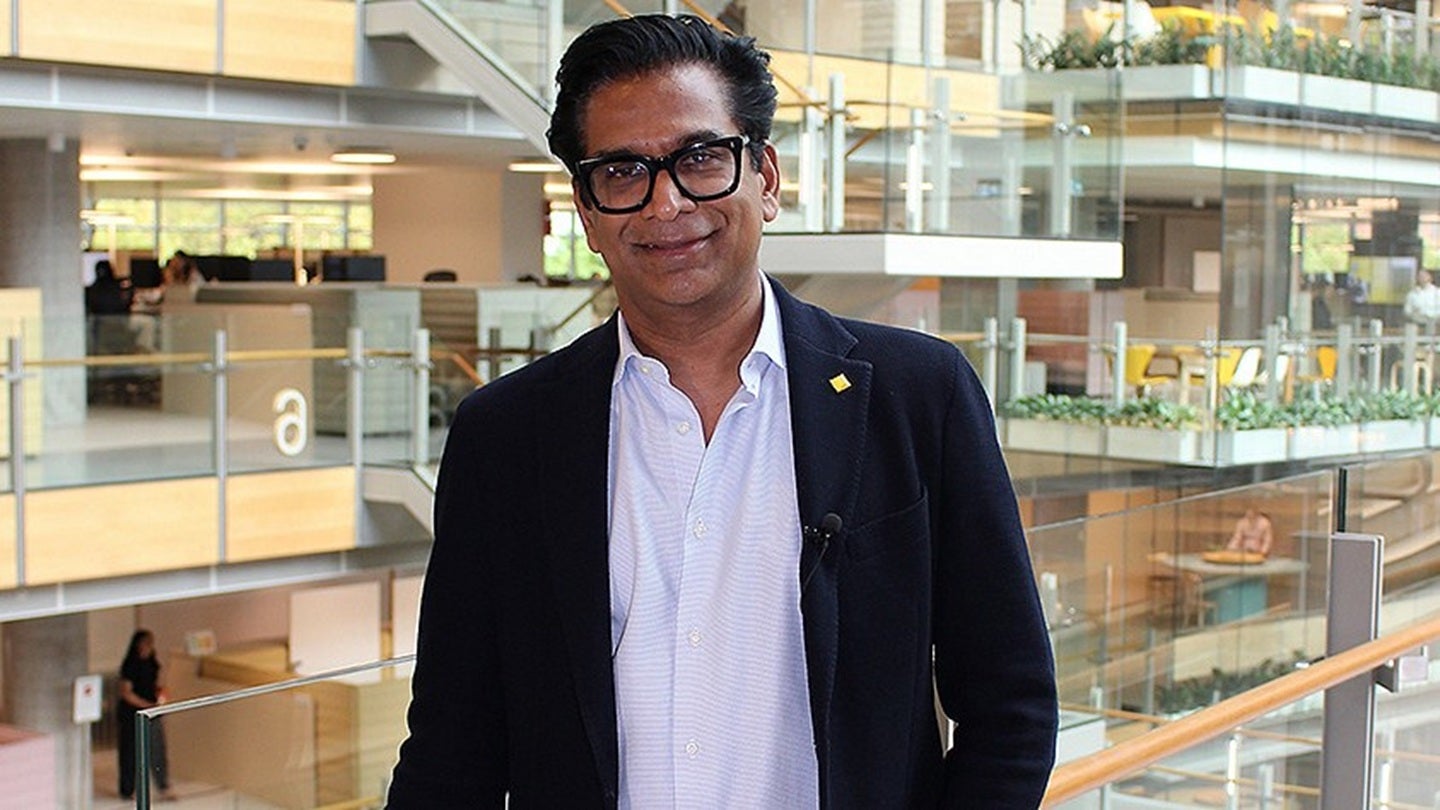
As banks move from AI experimentation to scaled deployment, they are balancing measurable returns with infrastructure costs, governance and customer trust. Commonwealth Bank of Australia (CBA) is applying AI across fraud prevention, personalisation and software engineering.
In this interview, Ranil Boteju, the chief AI officer at CBA, tells RBI how the bank achieved A$200m ($142.4m) in gross AI benefits, its approach to workforce upskilling and token cost management, and why human oversight remains central to responsible AI adoption.
Go deeper with GlobalData


Access deeper industry intelligence
Experience unmatched clarity with a single platform that combines unique data, AI, and human expertise.
RBI: The chief AI officer role is a very new addition to banking. Could you specify the areas that fall under your responsibility at CBA, and what does success look like for you over the next two years or so?
Ranil Boteju: The chief AI officer role is accountable for leading and delivering the bank’s AI strategy. AI will impact every aspect of the bank and teams across the organisation will be building and deploying AI. But to do this successfully and responsibly, teams need to be supported through a coordinated approach that is within my remit.
The coordinated approach is made up of a few key things.
Number one, we want to have a single enterprise platform for engineers and data scientists across the bank.
The second is we want everyone across the bank to be using very consistent and standardised AI controls and guardrails, and have a consistent approach to evaluation of outcomes as well as observability.
Thirdly, the cost of tokens is becoming a very pressing and important topic as AI adoption grows. We review and track token usage and forecast based on upcoming use cases and projected ongoing costs and help prioritise where AI use can deliver the best outcomes. We’ve also been looking at things like scaling small language models or using open source to manage costs.
Additionally, my remit includes AI enablement to facilitate personal productivity across all job families with a range of tools.
Finally, I oversee an AI science research lab looking at innovations a couple of horizons away from what we’re doing now.
RBI: As AI is ramping up, what is the focus really on? Is it on upscaling existing bankers or recruiting new tech talent?
Ranil: It’s a combination of both. Everyone who works at the bank needs to use AI, and it is critical for our people to upskill by providing tools and training and practical experience to build organisation-wide AI literacy.
Additionally, we need to continue to develop very specialised, technical skills. We are building specialised skills ourselves through our own talent and our partnerships with leading tech and AI companies. We also continue to attract world-class talent to contribute to our specialist skills.
RBI: We all keep on talking about AI adoption, but beyond the number of new AI tools being used, what are the business metrics that CBA is using to track genuine value and efficiency?
Ranil: I’m going to use the example of AI-powered engineering. Currently, over 80% of our 7,800 engineers are using a combination of bought and built AI-powered coding agents.
As a result, they delivered three times more code changes over the past year. This increase helped us solve more than 15,000 coding quality, resilience, and security issues, freeing up engineers to focus on higher-value, complex work.
RBI: Let’s talk about the bottom line. How do you balance the massive upfront cost of AI infrastructure and delivering clear financial returns for the bank?
Ranil: Value and ROI are critical. However, at CBA we are focused on making sure that we can demonstrate a benefit from AI to our customers first and foremost, and secondly, to our colleagues. And when you talk to anyone at Commonwealth Bank, if you ask them why we are focused on AI, they would all answer with the same four things.
Number one is we have a really big focus on using AI to protect our customers from frauds and scams. That’s obviously a huge issue in banking all over the world, and AI is an incredible tool to help us do that.
Secondly, we’re using AI to make customer journeys much more personal and frictionless, finally making this whole concept of personalisation real.
Thirdly, there are benefits for personal productivity. So whether it’s engineers writing more code, or how long it takes to write a board paper, we definitely see the value there.
And then finally, just overall delivery improvements and we’re seeing things ship a lot faster now. This is critical in delivering a market-leading technology experience for our customers which remains an important differentiator for us.
When we looked at the various contributions of those things that I mentioned, about $200m of measured gross benefit was achieved in the 2026 financial year. For 2027, we expect to double gross benefits from AI use cases and exceed our level of investment in AI.
RBI: In a heavily regulated industry like banking, how does CBA ensure accountability and safety when rolling out new automated features?
Ranil: We are only delivering capabilities when we are confident that we have the right guardrails and controls in place. We are a regulated industry. So we’re very cautious about how we deploy customer-facing capabilities. We typically test these capabilities initially with employees, and then with much smaller groups of customers, and we will only scale when we have full confidence that our guardrails are robust.
We do a lot of outcome testing, so we use human in the loop. We have various agent-as-a-judge mechanisms, so we have multiple mechanisms to keep on checking that the outcomes are what they are supposed to be.
When it comes to exposing these directly to customers, we are quite cautious, and we’ll make sure that we have the checks and balances in place before we really scale and roll things out.
RBI: CBA has been active in using AI to detect scams in real time. How do you balance aggressive AI monitoring to prevent fraud without making customers feel like their financial privacy is being over-scrutinised?
Ranil: We always abide by our own privacy policies and regulations when using customer data. When it comes to frauds and scams, again, we are only using data that is relevant to the fraud or scam. And typically, this is algorithmically monitored.
We now have more than 80 million signals a day being monitored for transactions, and we’re generating up to 40,000 different intelligent alerts, warning customers when something doesn’t look right. Effectively, the AI is helping us really reduce the false positives, helps us optimise the existing rules.
RBI: Money is deeply personal, and trust is essential in banking. How do you decide where AI can improve customer service versus where a human touch must remain central?
Ranil: In terms of where AI should be used, we have a set of framing questions. We need to use AI only when it offers something critical for reaching a solution. We absolutely want to make sure AI is going to add a critical differentiator to this particular problem’s solution.
We are only focused on a certain number of large use cases where we feel we can demonstrate genuine benefits to our customers.
When it comes to human in the loop, that’s a very critical control that we have. In many of our processes, we have retained a human in the loop. At the Commonwealth Bank, we really believe that AI will be most beneficial when AI and humans are working effectively together. We feel that there are many things that AI can do that frees up humans to do more of the high-value, complex work.
But, when it comes to making the final decision, we absolutely would want to retain a human in that.