
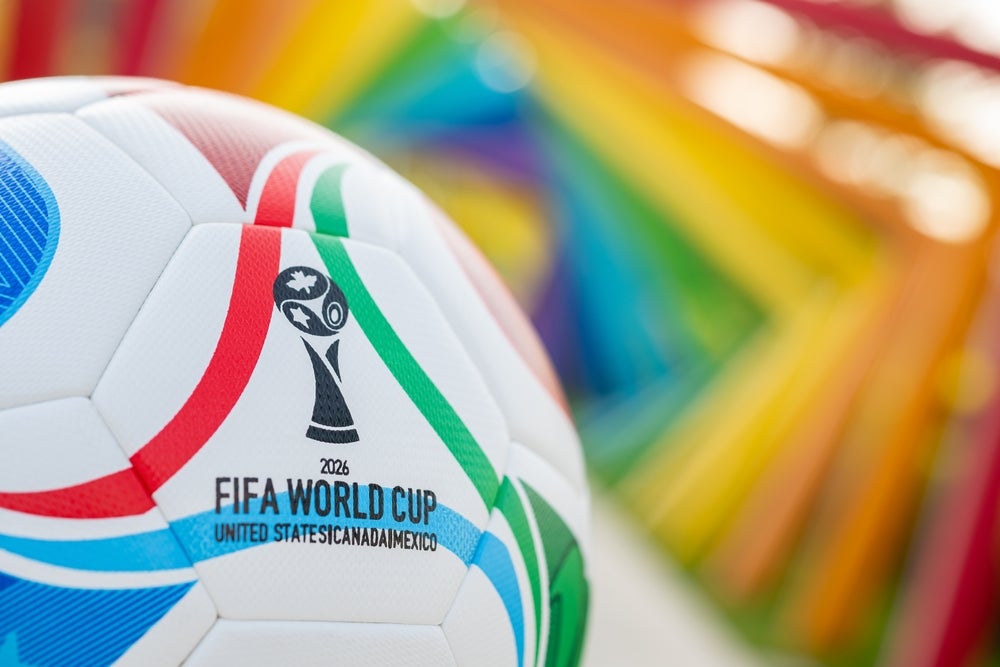
As the 2026 FIFA World Cup approaches, attention is naturally focused on what it represents, on and off the pitch: global connection, economic activity, and the movement of millions of people across borders. Major sporting events of this scale generate extraordinary volumes of transactions with travel bookings, ticket sales, accommodation and payments all compressed into a relatively short period of time.
What is less visible, but equally real, is that these same conditions also create an environment in which certain forms of criminal activity become highly prevalent. Large international events do not create financial crime. They attract it.
Following the tracks
Under normal conditions, many illicit activities remain fragmented, distributed across jurisdictions, and difficult to connect. During major sporting and cultural events, however, the density and velocity of financial flows increase significantly. Patterns that might otherwise remain diffuse begin to align. Signals that are usually isolated become part of a broader, more coherent picture.
Go deeper with GlobalData


Access deeper industry intelligence
Experience unmatched clarity with a single platform that combines unique data, AI, and human expertise.
What emerges is not a collection of isolated incidents, but something closer to a structured economic system operating in parallel to the legitimate one.
Research into financial crime linked to major events, including recent work from organisations such as The Knoble, shows that these activities often follow repeating and identifiable patterns. Recruitment of victims and intermediaries can begin months in advance; temporary business structures are created to facilitate transactions; fraud schemes, from ticketing scams to payment diversion, intensify in the weeks leading up to the event. Exploitation and monetisation occur during the peak period, followed by attempts to launder the proceeds once attention shifts elsewhere. Each phase leaves a financial footprint.
Accounts are opened and used in unusual ways. Payments are made. Funds move across borders or between individuals with no apparent economic relationship. Behaviour changes, sometimes subtly, sometimes abruptly. Taken in isolation, these signals can be difficult to interpret. Taken together, they begin to form a pattern.
Financial flows and operational response
In many cases, financial institutions represent the only point at which these otherwise fragmented activities become observable as part of a whole. While the underlying crimes may originate in physical or digital environments far removed from banking systems, they ultimately converge through financial flows. It is within these flows that connections can be inferred, anomalies detected, and patterns recognised.
The financial system has become more than a channel for economic activity. It is also, increasingly, a layer of visibility over complex and evolving forms of risk. However, visibility alone is not sufficient.
One of the central challenges facing financial institutions today is the growing gap between what can be observed and what can be acted upon in time. Financial crime is no longer constrained by the operational rhythms that shaped traditional control frameworks. Payments are instant, and digital interactions are continuous.
Criminal networks adapt quickly, adjusting tactics in response to detection mechanisms. Yet, many control processes remain sequential and reactive. Signals are identified, reviewed, escalated, and investigated, but often with unavoidable delays. By the time a pattern is fully understood, the activity may already have progressed or concluded. The result is a structural tension.
On the one hand, there is an unprecedented capacity to observe financial behaviour across channels, geographies, and timeframes. On the other hand, there are still limitations in how quickly and coherently this information can be translated into effective action. Major events such as the World Cup bring this tension into sharper focus.
Scaling up the fight
Financial crime is becoming more structured, more adaptive, and more integrated into the dynamics of the global economy. The environments in which it operates are increasingly interconnected, and the signals it generates are more abundant but also more complex.
Understanding this evolution requires moving beyond the idea of fraud as a series of isolated events. It requires recognising it as a system of behaviours that unfolds over time, leaves traces, and interacts with legitimate activity in ways that are not always immediately visible.
The question is no longer whether these signals exist. It is how effectively they can be interpreted, and how quickly they can inform meaningful responses.
Events like the World Cup do not change the nature of financial crime, they illuminate it. They reveal how it operates under pressure, how it scales, and adapts.
What we choose to do with that visibility – how we interpret it, and how we act on it – will play a defining role in shaping the resilience of financial systems in the years ahead.
Lenny Gusel, Head of Fraud Solutions for Feedzai in North America