For years, the payments debate has been framed as if the ending has already been written: cash down, digital up, and a cashless economy waiting just around the corner.
Digital payments have changed the way people pay, bank and run businesses. Banking apps are now part of daily life for millions of people, card payments dominate many retail settings, and younger consumers often move between digital wallets, cards and account-to-account payments without thinking much about it.
But cash has not disappeared, in 2026, no country has reached a fully cashless economy. In the UK, ATM cash withdrawals reached £76bn. Due to continued rationalisation of bank branches and ATMs, usage for some ATM operators has been evidenced to increase year on year according to Nationwide data.
Go deeper with GlobalData


Access deeper industry intelligence
Experience unmatched clarity with a single platform that combines unique data, AI, and human expertise.
That does not point to a market moving backwards. It points to a future where payments are hybrid, and we need to design it that way.
Resilience is the first test
The first issue is resilience. As more payments move onto digital channels, the impact of outages becomes bigger. When card networks, banking apps or online services fail, people still need to buy food, pay for transport, settle bills, or keep a shop open. Businesses still need to trade. Households still need options.
Cash gives the system a physical fallback. It does not need a phone battery, a working app, a login, a signal, or a live card terminal. That role becomes more important as the rest of the system becomes more connected and, in some ways, more dependent on the same digital rails.
Fintech has spent years improving speed, convenience and user experience and the work has delivered real benefits. The next phase needs to give the same attention to continuity; a payments system can be fast and popular on a normal day, while still being fragile on a bad one.
Access keeps cash working
The second issue is access. Branch closures have shifted the cash debate away from whether people use notes and coins, and towards whether the infrastructure still exists to support them. If people need cash but cannot withdraw it locally, access weakens. If businesses accept cash but cannot deposit takings safely and conveniently, cash acceptance becomes harder to sustain.
Public debate tends to focus on withdrawals, but cash only works properly when it can circulate. A customer takes cash out, spends it with a local business, and that business needs somewhere to bank it so when that loop is broken, the system starts to fray.
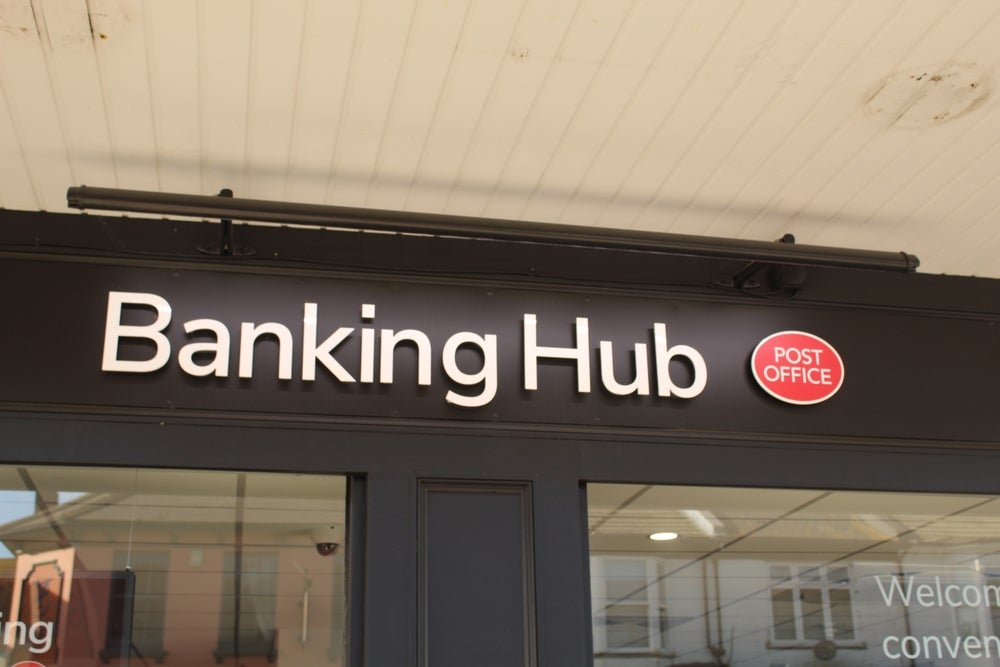
Banking hubs have become an increasingly visible response to this challenge. Awareness has grown, hundreds of services have now been delivered, and the latest Cash Access UK data shows strong use across personal and business transactions, with nearly one million customer transactions every month.
Design for real behaviour
We cannot keep discussing digital innovation while viewing physical infrastructure as an afterthought. Cards, apps, ATMs, banking hubs, retailers, processors, and cash services all contribute to the same customer experience.
The first solution is to design payment infrastructure as hybrid from the beginning. Banks, fintechs, and policymakers should plan cash access in tandem with digital services and not treat it as a separate legacy issue. This approach requires an understanding of actual behaviour.
Build a flexible access network
The second solution is to build a more flexible physical access network. That means using the right mix of banking hubs, deposit-taking ATMs, retail-based services and assisted support. It also means accepting that convenience matters. A service that technically exists but sits in the wrong place, opens at the wrong time, or feels difficult to use will not build confidence.
NCR Atleos provides ATM and self-service banking infrastructure across the UK. We support banks, retailers, and communities by offering access to cash, withdrawals, deposits, and shared services. From our perspective, the solution is rarely just “more machines” or “more counters” on their own. A better solution is a network that combines technology and human support in the places where people already are.
Neil Martin, Managing Director, UK, Ireland, Benelux, Baltics and Nordics, NCR Atleos