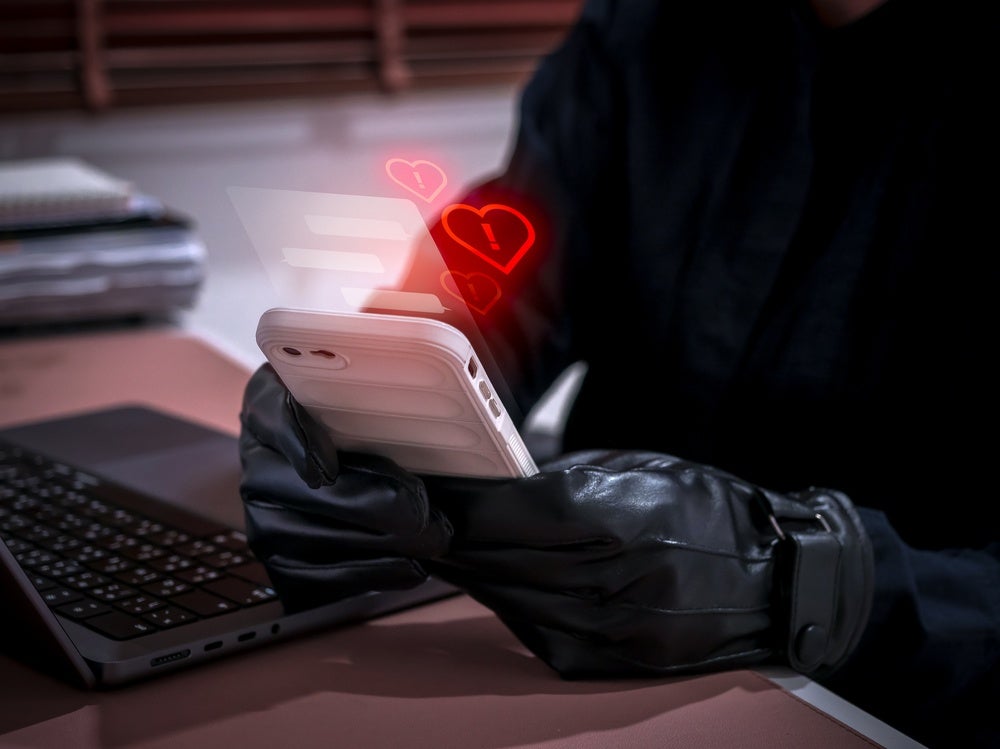
Romance scams reports may increase around Valentine’s Day (awareness campaigns certainly do), but these confidence scams are a year-round threat, leaving victims with deep financial and emotional scars.
Romance fraud is a deceptive and insidious crime that manipulates the emotions and trust of victims over extended periods of time. These scams often last months or years. It is a form of coercive control where the perpetrator exploits the victim through tactics of emotional abuse, humiliation, and isolation. What may begin with heightened emotion around key moments like Valentine’s Day can quickly become long-term financial and psychological harm.
Go deeper with GlobalData

Access deeper industry intelligence
Experience unmatched clarity with a single platform that combines unique data, AI, and human expertise.
Romance fraud continues to escalate in the UK, with Action Fraud estimating that victims lost £106m in the 2024-2025 financial year alone. The crime has affected tens of thousands of people in recent years, leaving lasting financial and emotional damage. The UK is not alone. Nasdaq’s Global Financial Crime report estimates romance scams and other confidence schemes accounted for $3.8 billion in losses globally.
Evolving criminal tactics have driven this surge, leveraging the capabilities of GenAI tools to create deepfake personas, hyper-personalise convincing outreach, and exploit social media and dating apps, fuelling the fraud epidemic even further.
As romance fraudsters drain not just money but hope from their victims, it may feel like the tide can’t be turned. But there are ways the financial sector can strike back and stop the damage.
Romance baiting scams
Traditionally, romance fraudsters exploited victims for financial gain by fabricating crises that compelled them to offer loans or direct financial support, only to disappear with the money. While this tactic is still in use, criminals have significantly evolved their methods.
Over the last year, we have seen a rise in “romance baiting,” more crudely referred to as “pig-butchering,” though Interpol has advised against using the latter term due to its stigmatising nature. This scam blends the emotional manipulation of romance fraud with the financial deception of investment scams, making it harder to detect.
In this scheme, fraudsters encourage victims to make investments by posing as successful investors in cryptocurrency. This often starts with small amounts, deceiving them into believing they’ve made significant returns.
Once hooked, they up the ante, encouraging the victim to invest ever larger amounts, draining savings, and in some cases, leaving them with significant debts.
This scam makes fraud detection more difficult, as victims believe they are engaging in legitimate investing rather than being duped. Fraudsters also leverage sophisticated technology using deepfake profiles, AI-generated conversations, and even fake trading platforms to reinforce their credibility.
The scale of devastation mirrors high-profile cases like The Tinder Swindler, where victims were not only financially ruined but also suffered emotional damage, struggling to accept they had been deceived.
How is AI giving criminals an advantage?
Just as businesses harness AI to scale and streamline, fraudsters are using the same tools to manipulate, deceive, and defraud at unprecedented levels.
Research on large language models (LLMs) in phishing attacks has shown that AI-generated scams achieve a staggering 54% click-through rate (CTR), matching human fraudsters but at a fraction of the cost. When AI is combined with human expertise, CTR jumps even higher to 56%, demonstrating the efficiency of these tools.
Beyond phishing, AI is now integral to romance-baiting scams. Fraudsters use AI-generated personas, recruit ‘models’ to enhance their deception, and even deploy deepfake videos and live video calls to build trust with victims.
One elderly lady in Scotland was duped out of £17,000 by scammers using deepfake AI technology. They convinced her to buy Steam gift cards, as the scammer highlighted that these would allow for their conversation to continue as they worked on an oil rig in the North Sea.
This is a clear example of the rise of AI-driven scams, turbocharged by dating apps and social media, which have removed all barriers. Fraudsters can now target anyone, anywhere, regardless of age or background, causing widespread societal harm.
Figures from Barclays highlight the scale and acceleration of romance scams in the UK. Reports rose by 20% in the first quarter of 2025 compared to the same period in 2024, with one in 10 UK adults either having been targeted by a romance scam or knowing someone who has.
Victims lost £8,000 on average in 2024, rising sharply to £19,000 among those aged 61 and over.
This new level of sophistication makes scams more convincing and harder to detect. Often, by the time victims realise they’ve been deceived, their savings have already been drained.
Steps for banks to stay alert
While banks have controls in place, most rely on traditional tools, flagging unusual transactions by size or frequency. But romance scams don’t always trigger these red flags, particularly when payments are made gradually and appear deliberate.
The UK’s efforts to curb APP fraud have seen new Consumer Standards of Caution regulations, meaning banks must also provide timely warnings about potential fraud before transactions are processed, especially in cases of romance baiting.
But fraudsters are skilled at identifying rigid controls and will socially engineer the victim to circumvent them. This is especially true in the case of ‘romance baiting’, with the customers’ behaviour changing over time, so traditional compliance measures are simply not enough.
Banks must adopt technologies that can identify changes in the behaviour of their customers, such as spotting hesitation, re-typing or unusual navigation patterns. This can enable them to provide context-specific warnings and, where appropriate, block high-risk transactions.
This need is further intensified by the UK APP fraud reimbursement rules, which increase banks’ liability for fraudulent payments, with banks potentially on the hook for millions of pounds in compensation.
Financial institutions shouldn’t just leverage behavioural insights, but they must foster greater industry collaboration. A unified approach, where intelligence is shared, intervention strategies are strengthened, and behavioural analytics are used to detect this deception is critical to stopping these criminals before more victims are exploited.
The fight against romance fraud demands action on all fronts. Customers must stay alert and question any financial requests in online relationships. Banks must step up by investing in smarter fraud detection and intervention measures. Regulators should continue tightening protections to hold fraudsters accountable.
Valentine’s Day may bring heightened attention to romance scams, but the threat does not end on 14 February. Only through a coordinated effort can we disrupt these scams and prevent more victims from suffering financial and emotional harm.
Jonathan Frost, director of global Advisory for EMEA at BioCatch